The Building That Doesn’t Know What It Is
By Peter Yoder. . 2 minute read.
2-4 unit homes qualify for the most generous leverage in consumer finance, but no part of the housing system is built to transact them.
On a quiet block in Pittsburgh, there’s a fourplex listed for $535,000. The seller is a retiring landlord. Three units are occupied, one is vacant. The building generates enough rent to offset 67% of the monthly mortgage.
But the listing has sat for weeks. There’s no investor interest; the yields aren’t high enough. And the agent hasn’t marketed it to homeowners, who rarely browse small multifamily listings. The unit count is flagged, but the financing potential is not. The property sits: legal, rentable, financeable, and unnoticed.
Across the country, 2-4 unit housing occupies this same in-between space. It is the only class of property in America that is both income-producing and eligible for consumer mortgage financing. FHA, VA, and conventional loans all support it. Buyers can use projected rental income to qualify. The logic is sound, the policy is old, and the financing works.
But the market does not.
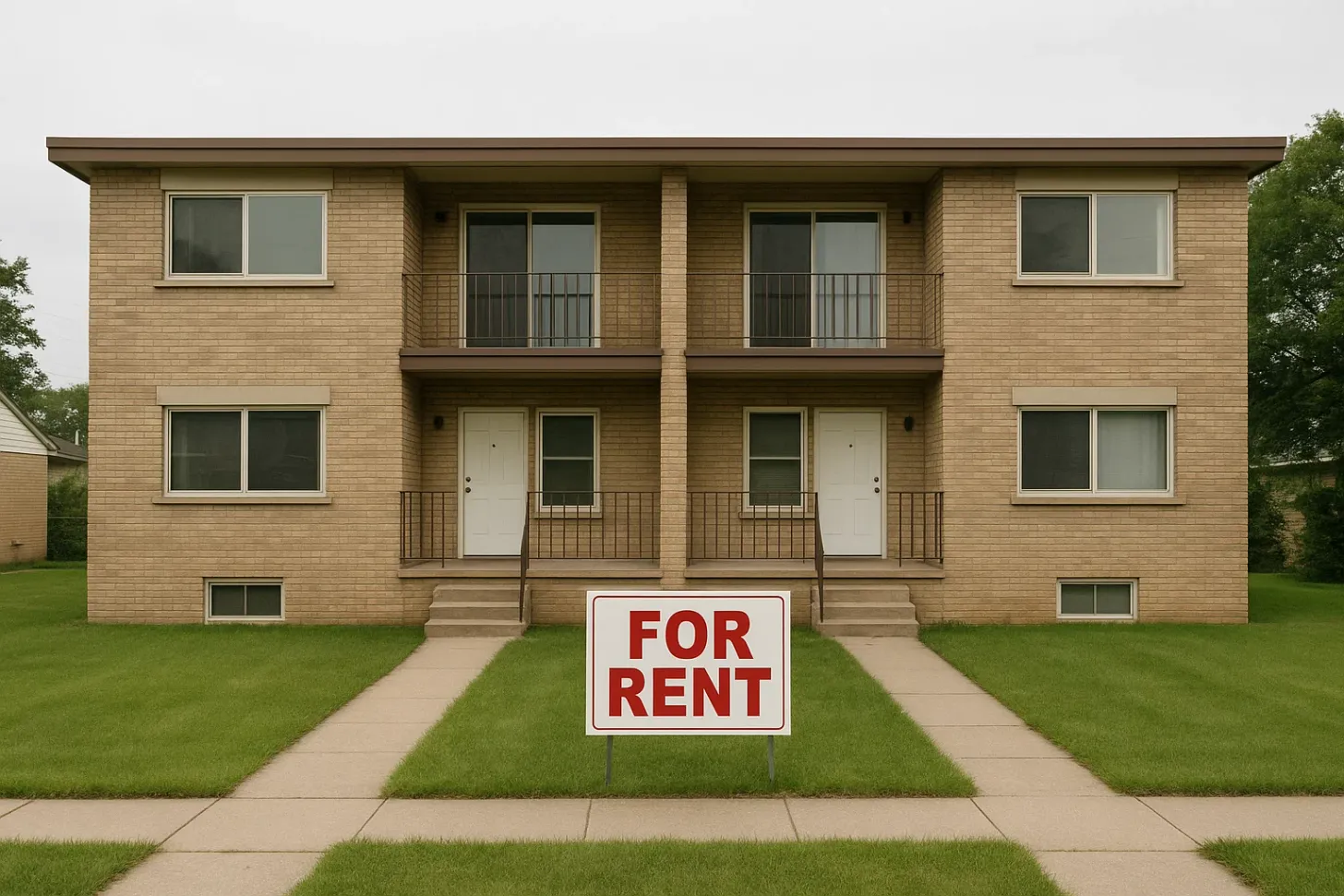
2-4 unit homes are rarely priced for their utility. They’re rarely marketed for their structure. The average residential agent isn’t trained to model rent offsets. Commercial brokers don’t handle deals under five units. Developers have no scalable exit strategy. Institutions won’t touch scattered-site sub-scale attached inventory.
There is no dominant platform, no system of representation, no set of norms.
This was not always true. For most of the 20th century, duplexes and triplexes were an ordinary part of American homebuilding. They filled out city grids and provided a first step on the ladder to ownership. The people who bought them weren’t investors. They were teachers, machinists, postal workers, people who could afford a nominal down payment and manage a few tenants.
Today, these same properties exist in policy but not in practice. The legal entitlement is there, the mortgage loan is there, but the buyer and seller are rarely brought together in a structured way.
It’s a problem of classification.
2-4 unit homes are residential in regulation, but commercial in workflow. They require operational knowledge: leases, tenants, maintenance, zoning, that the consumer system isn’t built to handle. And the institutional system won’t engage with an asset this small.
So the buildings remain priced as if they’re investment assets, bought (occasionally) by consumers, supported by financing infrastructure that almost no one in the transaction is modeling for.
And in a market that talks constantly about scarcity, it’s worth asking how much of it is actually just mislabeling. The fourplex in Pittsburgh has everything it needs to transact, except a category.